


A recent unpublished Court of Appeal decision discussed the application of an often-misunderstood rule in workers’ compensation: The “premises line rule.”
The case, Wrenne v. JA Sutherland, Inc., involved the death of an employee at a fast-food restaurant while he was on an unpaid 30 minute meal break.
The employee had clocked out and went to the parking lot where he sat down on the curb for his 30-minute unpaid lunch break. He was then stabbed by a transient and died.
His parents and estate filed a wrongful death civil lawsuit against the employer for negligence. The trial court dismissed the lawsuit on the grounds that the claim was governed by the workers’ compensation exclusivity rule. The appellate court affirmed this decision.
The court initially noted that the touchstone of whether an injury is governed by the exclusive remedy provisions of the Workers’ Compensation Act is whether the injury or death occurred arising out of and in the course of employment. The phrase “in the course of employment” refers to the “time, place, and circumstances under which the injury occurred” and “arising out of the employment” requires that the employment and the injury must be linked in some causal fashion.
The court also discussed the going and coming rule, which bars claims that arise out of a local commute to a fixed place of business. While the going and coming rule may be applied to some off-premises lunchtime injuries (thereby excluding them), compensation will be awarded if the employee was being paid at the time he suffered the off-premises injury. However, off premise lunchtime injuries are not compensable where the employee is unpaid during the lunch break.
The court then turned to the “personal comfort doctrine,” which generally provides that compensation may be awarded when the employee is engaged briefly and during working hours in a personal act that is necessary or helpful to his comfort or convenience, even though it may be a departure or temporary abandonment of employment. These include off-premises injuries suffered by an employee during a paid break, as well as injuries during a regular lunch break, even if the lunch break is technically outside the regular hours of employment and uncompensated. Cessation of work for eating, drinking, and similar necessities are “necessary incidents of employment” and injuries sustained during these activities would be compensable.
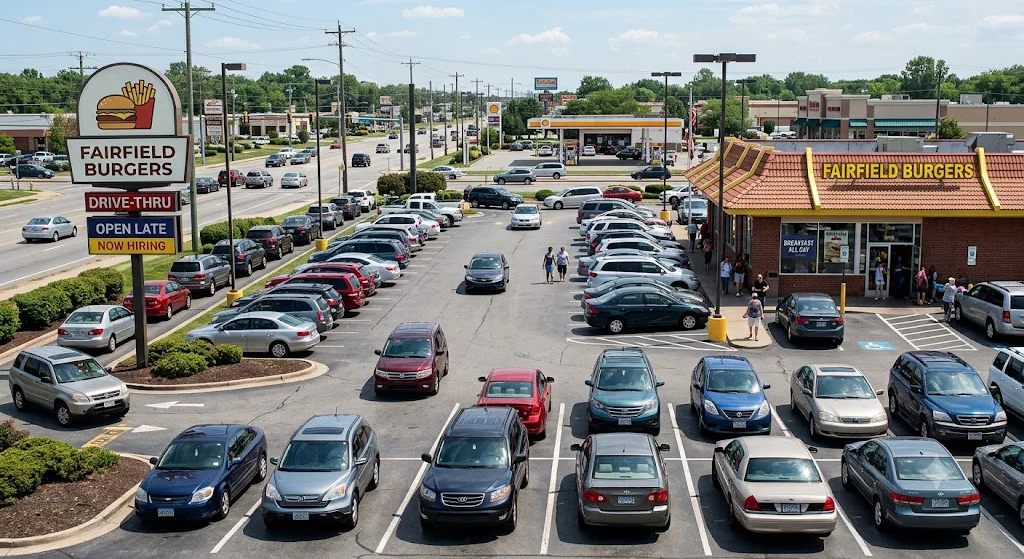
Finally, the court discussed the “premises line rule,” which attempts to demarcate where the employer’s workplace begins and ends, as well as when the employee’s commute terminates or begins. The general rule is that the employment relationship commences once the employee enters the employer premises. Before such entry, the going and coming rule ordinarily precludes workers’ compensation benefits.
Applying these various doctrines to the facts of the case, the court concluded that the employee’s death arose out of and occurred in the course of his employment and was therefore governed exclusively by the Workers’ Compensation Act. The court rejected the claim that the employee was engaging in a purely personal act that did not provide any benefit to his employer. He was on an unpaid lunch break in the employer’s parking lot, and this did not preclude application of the premises line rule. His death was therefore industrially-related.
The court did make an effort to distinguish the facts of this case from other cases where an employee unreasonably delays his entry or departure from his place of employment, which may preclude an award of workers’ compensation benefits.
In this case, it was undisputed that the employee was not commuting when he died. Rather, he was on his break on the employer’s premises. Nor did he engage in any conduct that was expressly-prohibited by his employer. Finally, taking a lunch break is conduct that is incidental to employment, even if it is uncompensated.
The Wrenne case is a fairly straightforward application of a number of workers’ compensation doctrines, the most puzzling of which to most practitioners is the premises line rule.
The fundamental question in such cases is: Where does the workplace begin and how far does the workplace extend in order to remove an injury from being AOE/COE?
The courts generally require a significant deviation by an employee from their daily work activities before denying benefits. An employee who is injured while taking an unpaid meal break in the employer’s parking lot—absent other facts indicating a deviation from the workplace—is more than likely qualified for benefits under the workers’ compensation system.
Michael P. Burns is a Partner at Bradford & Barthel’s San Jose location. Before joining B&B, Michael practiced civil litigation and employment law. If you have questions about workers’ compensation defense issues, feel free to contact Michael at mburns@bradfordbarthel.com or (408) 392-8202.
Viewing this website does not form an attorney/client relationship between you and Bradford & Barthel, LLP or any of its attorneys. This website is for informational purposes only and does not contain legal advice. Please do not act or refrain from acting based on anything you read on this site. This document is not a substitute for legal advice and may not address every factual scenario. If you have a legal question, we encourage you to contact your favorite Bradford & Barthel, LLP attorney to discuss the legal issues applicable to your unique case. No website is entirely secure, so please be cautious with information provided through the contact form or email. Do not assume confidentiality exists in anything you send through this website or email, until an attorney/client relationship is formed.