


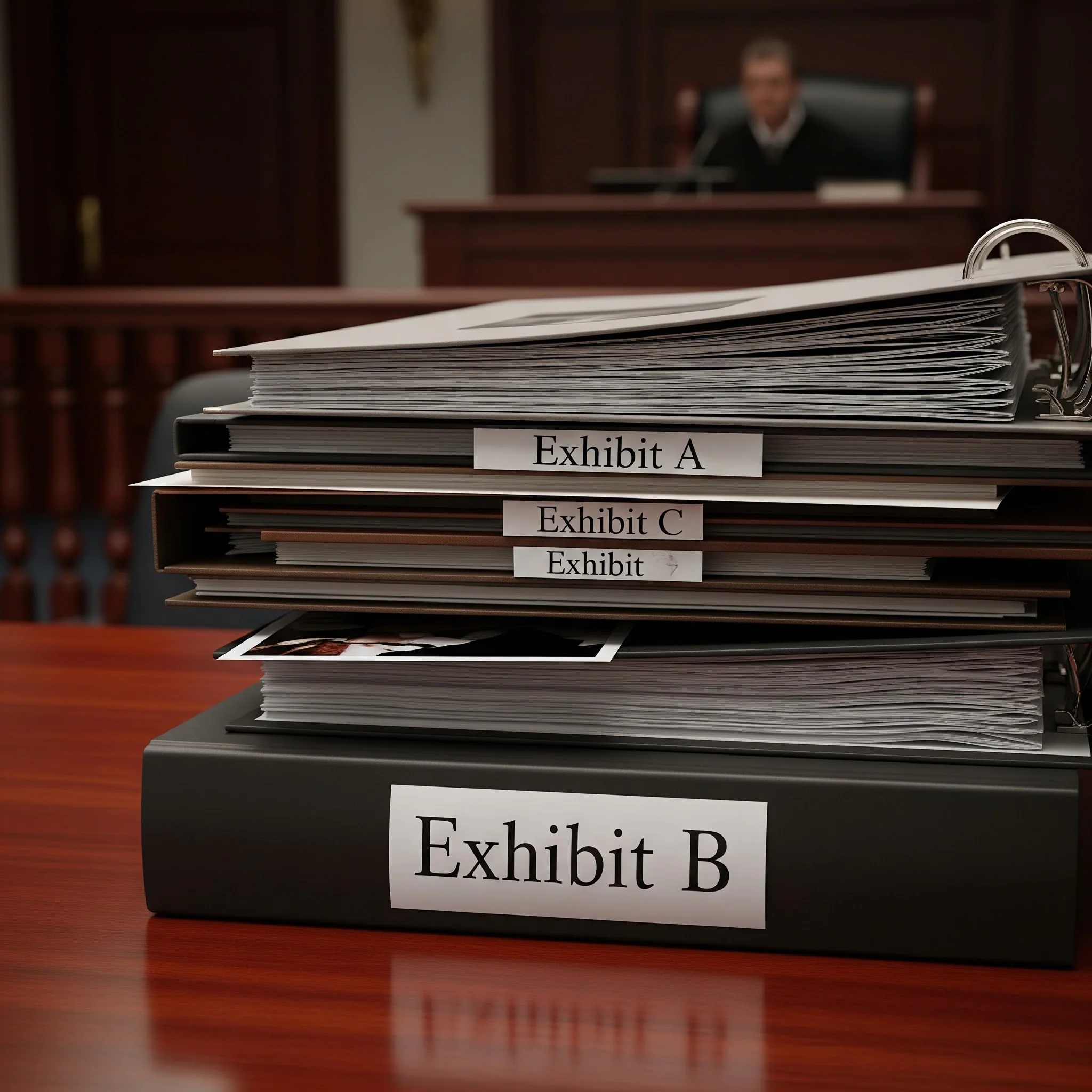
This is the second of a two-part article regarding workers’ compensation fraud. In Exhibit “A”, we learned about the relative rarity of classic surveillance catches and wandered into the teeth of California Insurance Code section 1871.4. Today’s article, Exhibit “B”, explores alternatives to sub rosa for catching the bad guy—preferably without hiding in a van, eating cheap beef jerky, and filming someone watering petunias for three straight days. As Joan Rivers famously observed about the grueling absurdity of certain operations:
“I’ve had so much plastic surgery, when I die they will donate my body to Tupperware.”
Spending 72 hours tracking an applicant who does nothing but visit a drive-thru will make you wish your file could be sealed in Tupperware, too.
Paper Trail Trumps the Tape
The best fraud files don’t start in a dark parking lot with binoculars. They start in a well-lit records room.
As suggested above, surveillance is wildly overrated. It’s expensive, unpredictable, and even when the investigator captures the equivalent of Bigfoot riding a bicycle, getting that video admitted into evidence usually requires navigating enough procedural potholes and character-building exercises to make a motion to compel feel like a warm childhood memory.
Surveillance also has one of the lowest highlight-to-blooper ratios in workers’ compensation. Everyone remembers the applicant caught loading cinder blocks into a pickup truck after testifying he couldn’t lift a gallon of milk. Nobody remembers the investigator who spent three consecutive days gathering damning evidence that the applicant owned a hose, drove to physical therapy, compared breakfast cereal prices, and returned home with absolutely nothing useful except a mileage reimbursement request and empty Coke cans. (At five cents per can, a long, hot, miserable day in the van can be worth as much as a quarter, after all!)
The problem is that surveillance captures only a tiny, carefully edited slice of someone’s life. Medical records, deposition transcripts, pharmacy logs, employment records, and subpoenaed documents tell a far more interesting story—the one that unfolds over months or years instead of four minutes in a Costco parking lot.
For that reason, carriers typically authorize surveillance only after something has already raised an eyebrow: conflicting medical histories, suspicious social media posts, anonymous tips, inconsistent deposition testimony, job duties that don’t quite fit the alleged disability, or enough financial exposure to justify taking a closer look.
Tip for defense attorneys: Don’t recommend sub rosa too soon or too often. Otherwise, your hard-earned reputation as a talented C&R negotiator may take a tiny reputational faceplant when repeated “get surveillance” recommendations cause someone to wonder whether your firm grip on the lid of litigation expenses has quietly loosened.
Even when authorized, surveillance frequently proves less valuable than people imagine. A few minutes of video rarely establish work capacity by themselves. Someone carrying groceries, washing a car, or chasing an escaped Labrador tells you almost nothing about whether they can perform full-time employment. And even when film has revealed activity exceeding prescribed restrictions, many a well-coached applicant has sidestepped problems by reporting they suffered from a temporary exacerbation thereafter.
In California, surveillance is most valuable when it impeaches credibility, contradicts a specific statement, or provides additional facts for a QME, AME, or treating physician to consider. Standing alone, surveillance videos seldom win cases. They mostly give lawyers something to argue about while billing in one-tenth-hour increments.
Ask enough California defense attorneys and investigators, and you’ll hear the same story. Most surveillance produces nothing useful. Quite a bit produces footage so ambiguous it never sees the inside of a courtroom. A relatively small percentage uncovers genuinely valuable impeachment evidence. An even smaller percentage results in a referral under Insurance Code section 1871.4 or a criminal prosecution.
Unfortunately, no one knows the actual percentages because no reliable study has ever measured them. Which, in a profession obsessed with evidence, is a little ironic.
Sub Rosa Is Exciting Right Up Until It Helps the Applicant
An excellent likelihood of expensive, valueless surveillance evidence is bad, but it can get worse. Say you get video of the applicant convincingly going nowhere without their wheelchair, and it shows an applicant who presents in as bad shape after the medical-legal evaluation as before. Although you might want to deep-six that film, you do not have that option. Reason: spoliation of evidence. The Applicant’s counsel is entitled to review and receive a copy of the film. (Just check out their first letter to the defense issuing an ongoing demand for video if you have any doubt.)
Spoliation occurs when someone makes important evidence disappear—or allows it to disappear—after they know (or should know) it may be needed in a legal case.
Spoliation of evidence is litigation’s version of “the dog ate my homework”—except the homework was a surveillance video, a text message chain, or the forklift that allegedly caused the injury. Judges tend to become suspicious when important evidence mysteriously disappears shortly after someone realizes it might become Exhibit “A”.
So, before you celebrate your brilliant strategy of making inconvenient evidence mysteriously disappear, remember there’s one small problem. While California doesn’t recognize a separate tort lawsuit for spoliation, the WCAB has plenty of ways to express its disappointment. A Workers’ Compensation Judge may infer that the missing evidence would have been devastating to the party who destroyed it, exclude related evidence or testimony, reopen discovery to figure out what happened, or impose whatever procedural or evidentiary sanctions are appropriate.
In other words, shredding the evidence rarely makes the problem disappear—it usually just gives the judge another reason to wonder what was so important that someone felt compelled to make it vanish.
Warning to Eager Beaver Defense Counsel
The biggest rookie mistake young defense attorneys make is screaming “FRAUD!” the moment they spot a minor typo. Believing a client will appreciate the lawyer’s aggressive stance, only the inexperienced or unseasoned (both of which often go together) will immediately applaud this hill to stand on without more analysis and (much) more evidence.
Fraud is a massive accusation. Alleging it is easy; proving it is a nightmare. Cry wolf too early, and you destroy your own credibility faster than the applicant destroyed theirs. Often, the absolute best strategy is to sit back, present the conflicting documents, conduct a polite cross-examination, and let the Workers’ Compensation Judge (WCJ) connect the glaringly obvious dots themselves.
Sometimes, simply destroying their credibility is all the victory you need to bag that often elusive but always satisfying take-nothing. 3
The Final Verdict
Real fraud litigation isn’t glamorous. Although Inspector Clouseau (The Pink Panther) and Ace Ventura (Pet Detective) always got their men (and typically the eye of their beloved), their so-called talents would be wasted in California workers’ compensation… unless the injury was allegedly caused by a fabulous diamond or a dolphin. (Aren’t they all?) Similarly, fraud convictions aren’t built on drone footage or dramatic courtroom confessions (“You can’t handle the truth!”).
Rather, potential convictions are more often developed by painstakingly assembling one deposition transcript, doctor report, and subpoenaed document at a time. A forgotten clinic visit here, an awkward social media post there, an inconsistent deposition answer under oath. Individually, they look like typos. Collectively, they tell a completely different story.
We all love the video of the guy lifting a freezer on temporary disability—it makes for fantastic seminar slides. But real defense work is not captured on videotape. It is buried deep around page 847 of a subpoenaed medical packet, resting right next to the record the Applicant swore under penalty of perjury never existed.
Holding all of the foregoing to one side (and I just know you will!), I wish every reader at least one opportunity to hear a paraphrase of that famous Hawaii Five-O tagline:
“Book ’em, Danno.” 4
Don R. Barthel is one of the founding partners of Bradford and Barthel, and is based in the firm’s Sacramento office. He has taken dozens of doctor depositions and analyzed thousands of medical-legal reports in order to correct innumerable errors, including misapplications of the AMA Guides, statutory misunderstandings, and other errors making the underlying medical reporting entirely speculative and unreliable. If you have any questions about workers’ compensation defense issues, please feel free to contact him at 916.569.0790 or via email at dbarthel@bradfordbarthel.com.
3 While a “take nothing” may be all you need as an adjuster or defense attorney to satisfy the employer, the carrier, the third-party administrator (TPA), and your supervisor, your legal snooping may have led to additional reporting obligations for yourself, though not for the bench. A Workers’ Compensation Judge isn’t the workers’ compensation equivalent of a mandatory crime reporter; even if a WCJ concludes an Applicant committed fraud, the judge is not generally required by statute to notify criminal authorities. The reporting rules are considerably different for the defense. Under California law, insurers and self-insured employers are generally required to report suspected workers’ compensation fraud to the California Department of Insurance Fraud Division within 60 days of discovering or reasonably suspecting fraudulent activity. See Cal. Ins. Code § 1877.3. In other words, if the evidence starts looking less like an inconsistency and more like an audition for a perjury prosecution, the carrier doesn’t simply shrug, pay the file, and move on. At some point, the Special Investigation Unit (SIU) gets involved, fraud referral forms (FD-1) are prepared, and the Department of Insurance receives a formal referral. It is critical not to lump every credibility problem into the same legal bucket. An Applicant can lose because the WCJ does not believe a word of their testimony without anyone having committed a crime. Criminal fraud requires more than a judge thinking, “I’m not buying this.” It requires proof beyond a reasonable doubt of a knowingly false material statement made to obtain or deny workers’ compensation benefits. See Cal. Ins. Code § 1871.4(a). Those concepts often travel together, but they are not identical. In workers’ compensation, every fraud case involves credibility, but not every credibility problem amounts to statutory fraud.
4 The iconic catchphrase, “Book ’em, Danno,” belongs to Hawaii Five-O (both the classic 1968 CBS television broadcast series and the 2010 CBS television reboot series), delivered by character Detective Captain Steve McGarrett to his second-in-command, Danny “Danno” Williams, at the conclusion of almost every episode. (The author learned it from the 2010 reboot and is far too young to have caught the original 1968 premiere broadcast run, despite what any birth certificate might indicate.)
Viewing this website does not form an attorney/client relationship between you and Bradford & Barthel, LLP or any of its attorneys. This website is for informational purposes only and does not contain legal advice. Please do not act or refrain from acting based on anything you read on this site. This document is not a substitute for legal advice and may not address every factual scenario. If you have a legal question, we encourage you to contact your favorite Bradford & Barthel, LLP attorney to discuss the legal issues applicable to your unique case. No website is entirely secure, so please be cautious with information provided through the contact form or email. Do not assume confidentiality exists in anything you send through this website or email, until an attorney/client relationship is formed.