


When determining whether a psychiatric impairment may be compensable, it’s important to understand the “violent act” exception.
In a previous article, “If Everything Is Catastrophic, Is Anything?“, we explored the “catastrophic injury” exception under Labor Code § 4660.1(c)(2)(B). This article examines the other exception—the “violent act.”
Labor Code § 4660.1(c) provides:
“(c)(1) Except as provided in paragraph (2), there shall be no increase in impairment ratings for sleep dysfunction, sexual dysfunction, or psychiatric disorder arising out of a compensable physical injury.
(2) An increased impairment rating for psychiatric disorder is not subject to paragraph (1) if the compensable psychiatric injury resulted from either of the following:
(A) Being the victim of a violent act or direct exposure to a significant violent act within the meaning of Section 3208.3.
(B) A catastrophic injury, including, but not limited to, loss of a limb, paralysis, a severe burn, or a severe head injury.”
Viewing or “Suffering” a Paper Cut Is Not a “Violent Act”
A psychiatric impairment add-on may be compensable when it is substantially caused by being the victim of a violent act or by direct exposure to a significant violent act, even if the employee was not personally assaulted. Examples may include witnessing a coworker being shot, observing a fatal industrial accident at close range, or being directly exposed to another traumatic act of workplace violence. Whether a particular event qualifies is a fact-specific determination based on the circumstances of the case.
Defining “Violent Act” Sounds Simple—Right Up Until Judges Start Defining It
The WCAB has never adopted a single, comprehensive definition of the phrase “being the victim of a violent act or direct exposure to a significant violent act.” Instead, the meaning has evolved through a series of panel decisions, later discussed with approval in the en banc decision of Wilson v. State of California (Cal Fire) (2019) 84 Cal.Comp.Cases 393 (Appeals Board en banc).
Relying on Black’s Law Dictionary, the WCAB has described a violent act as one characterized by strong physical force, extreme or intense force, or conduct that is vehemently or passionately threatening. Importantly, the act need not be criminal or intentional.
Perhaps the most significant takeaway from Wilson is that the inquiry focuses on the mechanism of injury, not merely the severity of the resulting injury. As the WCAB explained:
“The focus in evaluating whether an injury qualifies for the exception in section 4660.1(c)(2)(A) is therefore on the mechanism of injury, not on the injury itself.”
Accordingly, the relevant question is not simply whether the applicant suffered a serious injury, but whether the event producing the injury was itself violent in nature. Ordinary workplace accidents involving routine or minimal force generally do not qualify, whereas accidents involving powerful, sudden, or destructive physical forces may satisfy the exception.
The “Don’t Overthink It” Test
For purposes of Labor Code § 4660.1(c)(2)(A), the analysis is relatively straightforward:
- What was the mechanism of injury?
- Did the event involve strong, extreme, or intense physical force (or a passionately threatening act)?
- Was the applicant the victim of that act or directly exposed to it?
If the answer to these questions is yes, the violent act exception may permit a psychiatric permanent disability rating that would otherwise be barred by Labor Code § 4660.1(c).
The “Yes, That Qualifies” Department
The applicant need not be the victim of an assault or other criminal conduct. The WCAB has repeatedly rejected the argument that a “violent act” requires intentional misconduct. Rather, industrial accidents involving extraordinary physical forces may qualify.
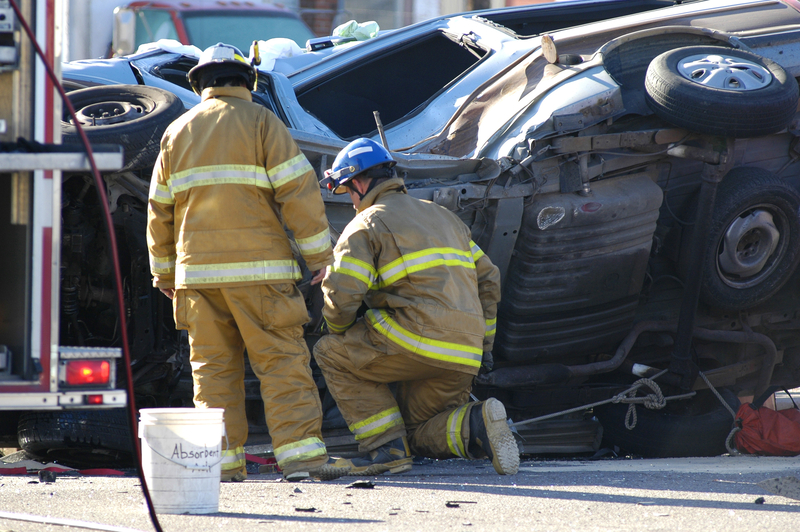
California workers’ compensation decisions illustrate that a wide range of traumatic industrial accidents satisfy the exception. Examples include an employee struck from behind by a vehicle and rendered unconscious, a truck driver whose vehicle rolled over and left him pinned in the cab until rescuers extricated him using the Jaws of Life, an arborist who fell approximately 20 feet from a tree while repeatedly striking the trunk during the descent, a high-speed motor vehicle collision caused by brake failure, and traumatic machinery accidents resulting in finger amputations.
Collectively, these cases demonstrate that the violent act exception generally applies where the mechanism of injury involves powerful, sudden, and destructive physical forces rather than routine workplace accidents.
When “Ouch” Isn’t Enough
By contrast, relatively minor industrial accidents that do not involve strong, extreme, or intense physical force generally fall outside the exception. For example, the WCAB concluded that an employee who walked into a glass wall—without breaking the glass, sustaining lacerations, or losing consciousness—was not the victim of a violent act. Likewise, ordinary slip-and-fall accidents have been held insufficient.
These decisions underscore that not every workplace injury involving physical contact or trauma constitutes a violent act. Rather, the inquiry focuses on whether the mechanism of injury involved the type of force contemplated by Labor Code § 4660.1(c)(2)(A).
The “I Wish I Hadn’t Seen That” Exception
The phrase “direct exposure to a significant violent act” is incorporated from Labor Code § 3208.3 and generally applies when an employee is not physically attacked but is directly exposed to a traumatic act of violence. Examples include witnessing a coworker being shot, observing a fatal industrial accident at close range, or being immediately present during another significant act of workplace violence. Whether the exposure is sufficiently “direct” and the act sufficiently “significant” remains a case-by-case determination.
Parting Shots
For years, the Legislature has made psychiatric claims progressively harder to prove. First came Labor Code § 3208.3. Then SB 899. Then SB 863, which essentially announced, “No psych PD for you!”—unless the applicant can prove a violent act or a catastrophic injury.
Along came Wilson to explain that a “violent act” is not simply about ending up badly hurt; it is about how the injury happened in the first place. In other words, prevailing on a psychiatric permanent disability claim today requires navigating enough statutory exceptions and judicial interpretations to make the injury seem like the injury was the easy part.
Like many roadmaps in California workers’ compensation, the applicable Labor Code sections and case law still contain a few detours, construction zones, and the occasional unexplained roundabout. The good news? At least this article didn’t require a GPS.
Don R. Barthel is one of the founding partners of Bradford and Barthel, and is based in the firm’s Sacramento office. He has taken dozens of doctor depositions and analyzed thousands of medical-legal reports in order to correct innumerable errors, including misapplications of the AMA Guides, statutory misunderstandings, and other errors making the underlying medical reporting entirely speculative and unreliable. If you have any questions about workers’ compensation defense issues, please feel free to contact him at 916.569.0790 or via email at dbarthel@bradfordbarthel.com.
Viewing this website does not form an attorney/client relationship between you and Bradford & Barthel, LLP or any of its attorneys. This website is for informational purposes only and does not contain legal advice. Please do not act or refrain from acting based on anything you read on this site. This document is not a substitute for legal advice and may not address every factual scenario. If you have a legal question, we encourage you to contact your favorite Bradford & Barthel, LLP attorney to discuss the legal issues applicable to your unique case. No website is entirely secure, so please be cautious with information provided through the contact form or email. Do not assume confidentiality exists in anything you send through this website or email, until an attorney/client relationship is formed.